
Why We Burn Things: Notes from a Midwest Pyromancer
Midwest Rot, Ritual, and Bonfire Gospel

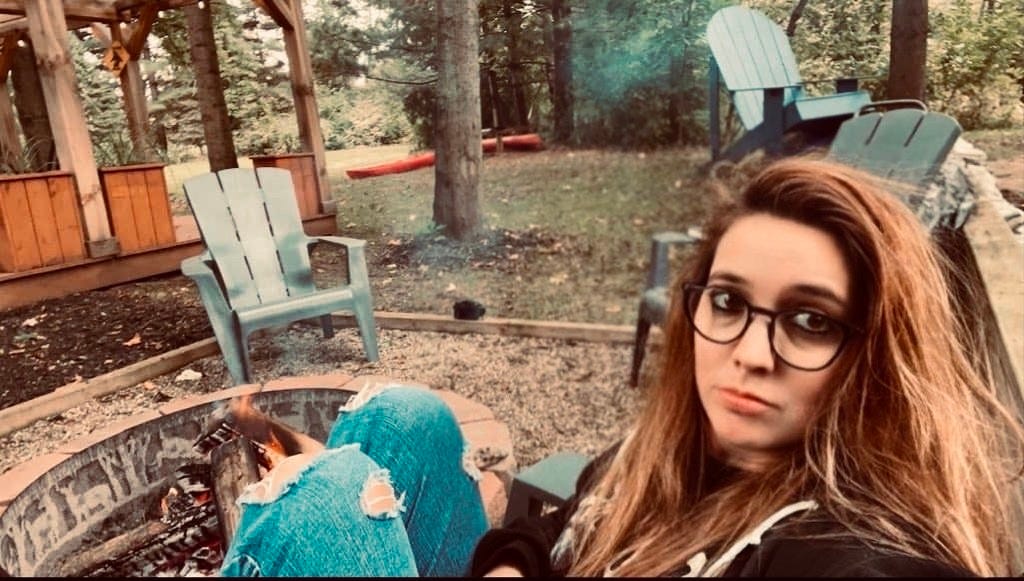
When I was around ten years old, my brother and I nearly burned down our neighbor’s backyard while recreating the barn fire scene from As I Lay Dying. Given our age difference, I was probably closer to thirteen, but age doesn’t really matter when it comes to moments like these. What matters is the whys and the wheres. It was for a school project. He had built a cardboard house out of old boxes we found in the basement, placed a Star Wars figure (I think Han Solo) inside to play the part of Darl Bundren, and lit it up while I filmed the scene with my digital camera that he bought me after my Confirmation (Catholic thing). Before we knew it, the wind changed and a spark that wasn’t meant to spread did. That’s the thing about fires. They rarely behave.
There’s always been something about that moment that lives in my chest. The way it cracked the air. Adrenaline. Fear. Pure unadulterated excitement. The way it stripped away whatever pretending we’d been doing. We put it out before it could truly spread and as far as I know, we never got caught by neighbors. I don’t remember getting in trouble with our parents, not really. Even though we were dumb enough to leave the footage on our family desktop in the living room. What I remember is the heat. The noise from the flame spreading. The crackle. The wind. The rush of emotion. The realization that destruction didn’t have to come from anger. That it could just… happen. That it could feel like telling the bone-deep truth.
We said we were doing it for Faulkner. But the truth is, I think we were testing something. Not just the fire. Ourselves. That fine line between imitation and instinct. Between education and smoke. Between the dormancy of interpretation and true risk of actual combustion. It was the first time I understood what Heidegger meant, in Being and Time and later in The Origin of the Work of Art, when he described how Being reveals itself in the rupture. The tearing away of roles. The sudden, irreversible undoing of the ordinary. A single afternoon changed us. Or just me, really. I didn’t feel like a child anymore, not really. I was suddenly transformed into a thing that could set the world in motion.
The Midwest doesn’t have a language for transformation. It has language for polite forgetting. It has the dialect for casserole grief and weather sorrows. It has words for what happens after the fire department leaves, for the insurance forms and the cautious shrugs and the mothers who threaten to drag you down to the burn unit if you do it again. But it doesn’t have language for the moment the flame jumps the line. For when the good kid goes quiet. When the wind shifts and the cardboard house catches on fire for real and Darl Bundren is no longer the only one in the path of change.
Out here, in the prairies of rot and repression, you don’t yell at your boss. You don’t talk back to your parents. You don’t cry in public. You wait. You rot politely. You seethe in your unfinished basement while the washing machine roars like a plane that lost an engine. You journal in your front room about “feeling stuck.” You light incense on your deck and call it healing. Swear that this is only the inbetween and one day you’ll be gone. Until one day, something combusts before your eyes. And if you’re lucky, it doesn’t take a whole neighborhood with it.
I’ve never been good at pretending the smell of smoke doesn’t bother me. I’ve lived my life surrounded by Midwest stoics. People who’d rather say they’re “keeping busy” than admit they’re falling apart in slow motion. People who’ve never let themselves get loud, or wild, or even really seen. But when the air gets thick and the walls start to hum, I notice. I always notice. Because once you’ve seen fire move on its own, you stop believing in stillness.
Fire isn’t a metaphor. It’s a brute force. It reduces everything to truth and ash. It doesn’t care about your self-concept or the parasocial relationships you have online. It doesn’t care what you meant to do. It moves. It consumes. It reveals. And that’s why we burn things. Not out of savagery. Not for destruction’s sake. But because some part of us is desperate to be seen without our skin on. To see what survives the heat. Like holding your hand over a lighter too long to show off or seeing how much you can throw into a bonfire before you become the problem.
Love is watching someone burn and being unable to look away.
That’s a line I heard somewhere, or maybe made up. Maybe it’s local folklore. But it feels true. Love is the part of us that doesn’t flinch when someone’s soul catches fire. That leans in when the mask melts like burnt plastic. It’s not a Hallmark card emotion or something you can tweet. It’s a witnessing. A standing there. Doing nothing. A holy kind of fucked. Beholden to the flame and nothing else.
Charles Bukowski once said, “What matters most is how well you walk through the fire.” But I don’t want to walk through it. I want to be it. I want to know what’s left of me when everything I’ve built to survive the Midwest rot has been stripped away. I want to hear my own voice unfiltered when the flames have ripped me from this, smile-and-wave landscape. Screaming. Singing. Whatever it is that comes out when the polite version burns off. Probably Blink- 182.
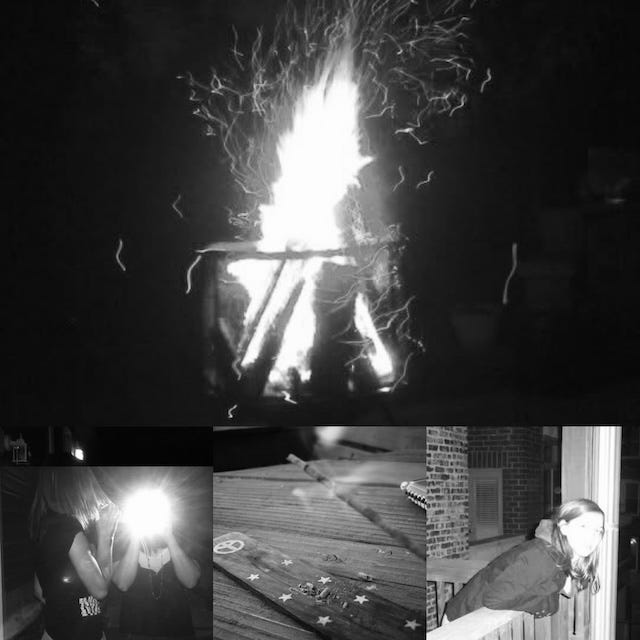
Mark Fisher talked about the slow destruction of the future. About how late capitalism strips us of newness, leaving only the looping playback of what we already know. How we’ve traded imagination for repetition. I think about that a lot when I light things. A Bath and Body Works candle. A Natural American Spirit cigarette. An Amazon box. A lie. Maybe that’s why the Midwest is so afraid of fire. Because it disrupts the loop. A glitch in the matrix. It reminds us we were never meant to live the same day over and over. Perhaps that’s why a movie like Groundhog Day was filmed here. The idea of repeating each day is horror for most, but par for the course here.
The Midwest survives by routine. By politeness and unspoken grief. A smile and a wave to a neighbor you don’t know. By leaving things unsaid so they won’t catch. We build traditions out of silence. We turn rituals into habit. But fire breaks that habit. It shouts when everything else whispers. It doesn’t ask permission to transform. It just does.
Fisher said the future died sometime around 2003, but I think it dies every time a person like me chooses safety over risk. Every time a spark is smothered before it can become something sacred. That’s why we have bonfires. We need somewhere to put the screams. Somewhere to watch our stuckness turn to smoke.
I think about one we had in a friend’s backyard. Playing bags on warped wooden boards we built in high school woodshop. One with a Cubs logo. The other, the White Sox. Midwest kids call it bags. The rest of the country calls it cornhole. We drank stale Mountain Dew, tossed beanbags at crooked plywood, and tried not to talk about the things we didn’t know how to say. Everything we were scared to name.
But something happens around fire. Something ancient. Something real. It makes silence unbearable. It makes the air shift. That night felt like a tear in the fabric. A rupture, like Heidegger wrote about in Being and Time: A moment when being reveals itself in the breakage. When the roles fall away and what’s underneath is exposed. That night, I saw what we were all holding back. And I knew I didn’t want to hold it anymore.
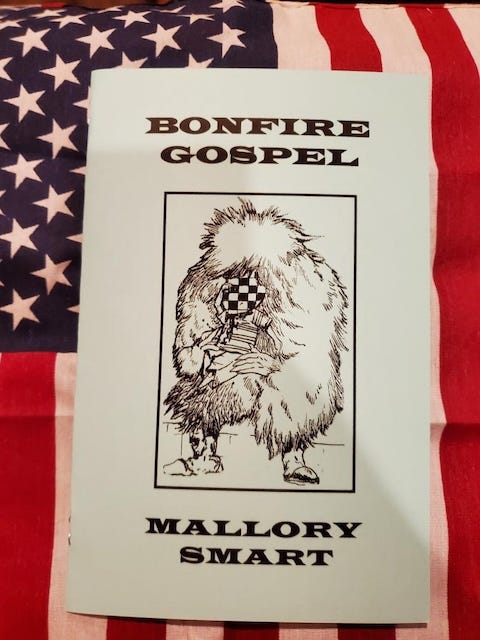
That’s what Bonfire Gospel is. Not a solution, but a burning. A refusal to stay looped. A theology for the people who feel something rumbling under the repetition.
Not as a chapbook, not even as a concept. But as a sensation. A low, hot feeling in the chest. The slow ignition of all the roles I was told to play. Girl. Good. Quiet. Midwest. I don’t believe in burning things just to watch them disappear. I believe in burning as revelation. The heat that peels back the compromise. The flame that tells the truth without apology.
I’m not interested in self-help. I’m interested in baring soul to the fire and giving it what it asks of me. I’m interested in Midwest rot as religious text. In building a theology out of broken screen doors and cigarette burns and that particular brand of loneliness you can only feel in a crowd that knows your whole family name.
Flame strips identity to what it is, not what the town decided it should be.
This essay, this ritual, this warning, this truth, is the core of my chapbook Bonfire Gospel, which is coming out from Bone Machine on December 6th.
It is the culmination of all the silence, the smoke, and the necessary burning. It’s the scripture I found when I stopped apologizing for the heat.
So maybe this is a gospel. Or maybe it’s just a warning. But if you smell smoke, know this:
It’s not an accident. It’s an awakening.
You can read Bonfire Gospel starting December 6th.
Who among us was not a teenager in our backyard with a digital camera making dioramas about Faulkner? It's every American's story, really.